A video production company for creator-led short-form should be judged on retention design, vertical-platform fluency, production speed, and rights clarity before price. This guide gives TikTok, Reels, and YouTube Shorts teams a practical scorecard for comparing agencies, freelancers, in-house crews, and AI-assisted workflows.
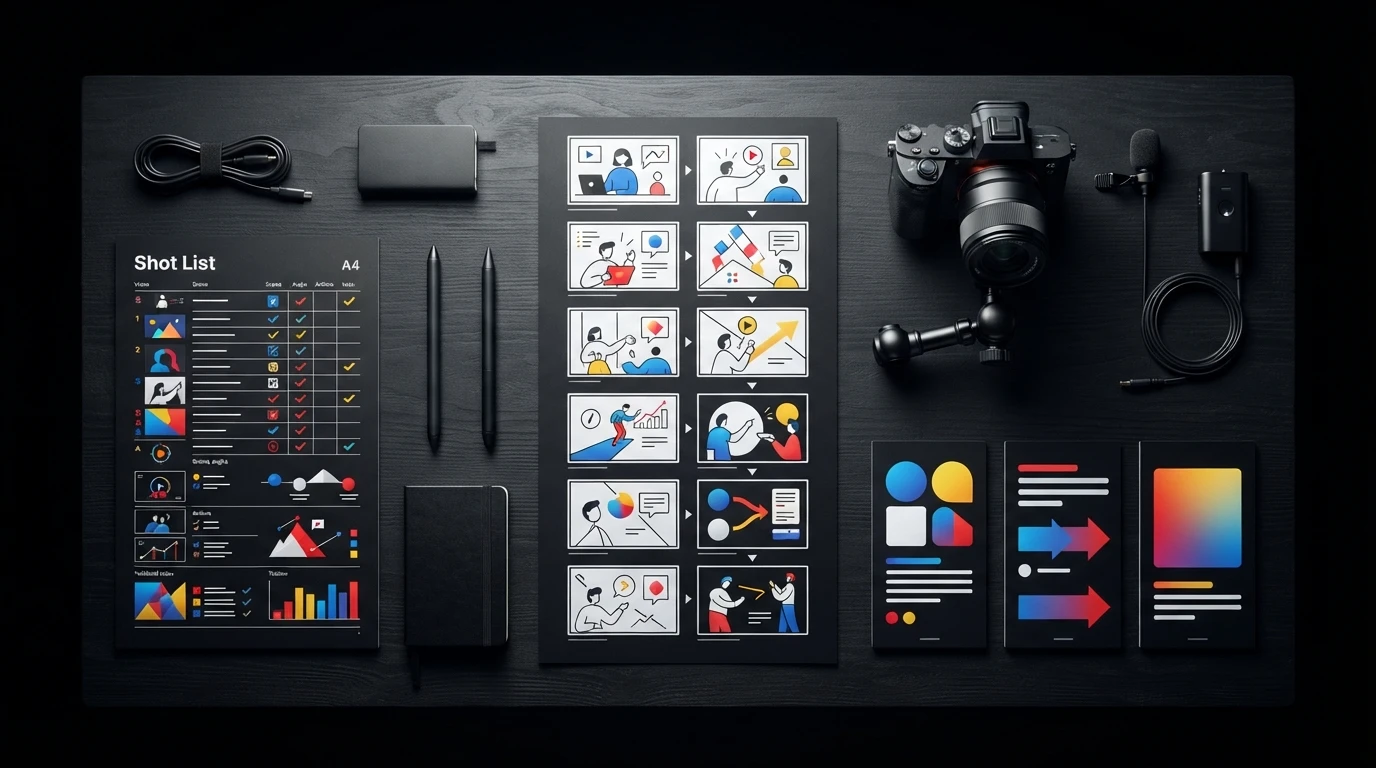
- Ask for a complete short-form script sample containing the hook, voiceover, B-roll, captions, SFX, transitions, CTA, and looping instruction.
- Compare production partners by workflow fit and publishing speed, not by the polish of a corporate showreel.
- Put source files, raw footage, usage rights, revision limits, turnaround expectations, and cancellation terms in writing.
- Test the working process with a paid batch before committing a full content calendar or monthly budget.
Platform knowledge now affects the deliverable itself. YouTube's official Shorts guidance says square or vertical uploads made after October 15, 2024 can qualify as Shorts when they run up to three minutes, which changes how teams plan framing, pacing, music, and narrative structure.
What Should You Evaluate Before Hiring a Video Production Company?

Video script writing is the first serious test of a short-form production partner. A strong team writes for speech, edits, and viewer attention at the same time. If its sample script reads like an article with stage directions added later, expect awkward voiceover pacing and expensive fixes in post-production.
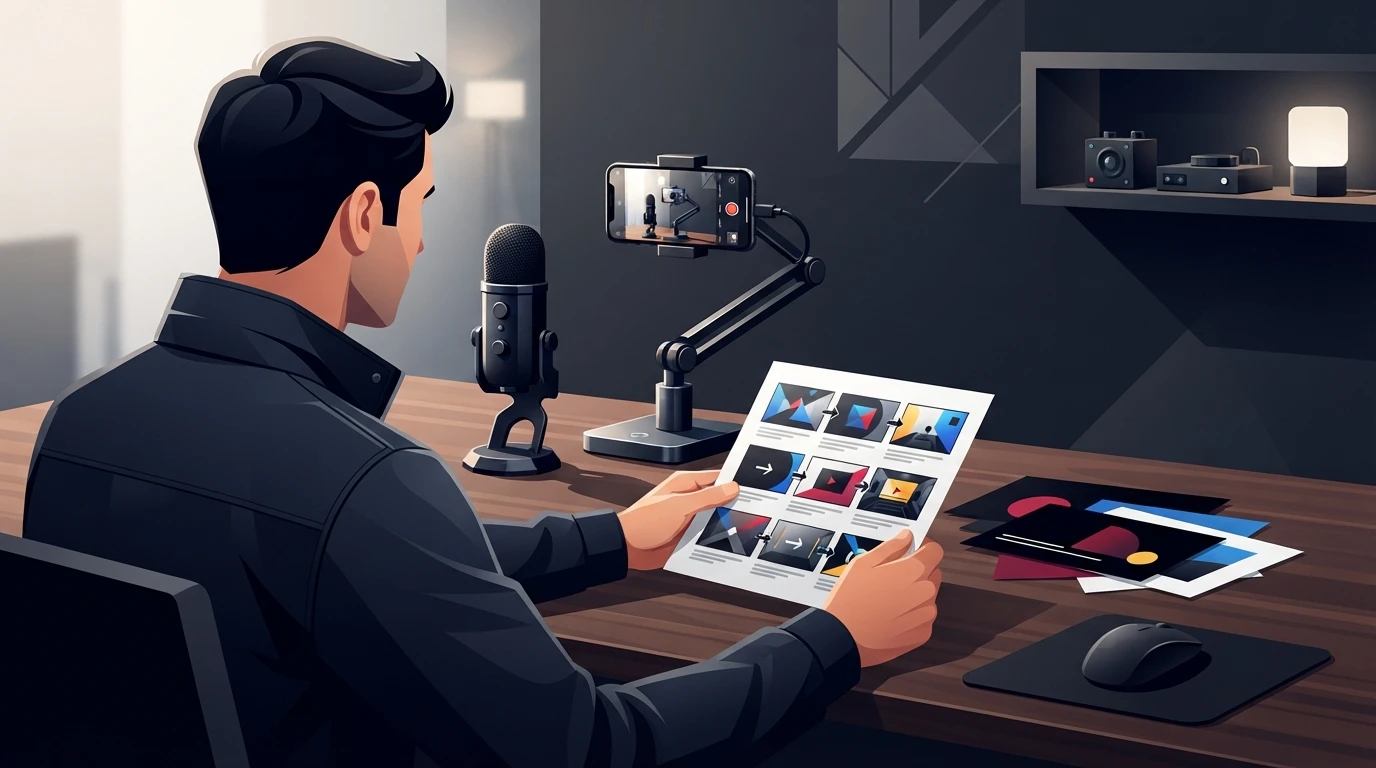
Start with the creative brief. It should define the intended viewer, the specific promise made by the video, supporting proof, desired action, brand restrictions, distribution platform, and visual references. A brief that says only "make this engaging" leaves every consequential decision unresolved.
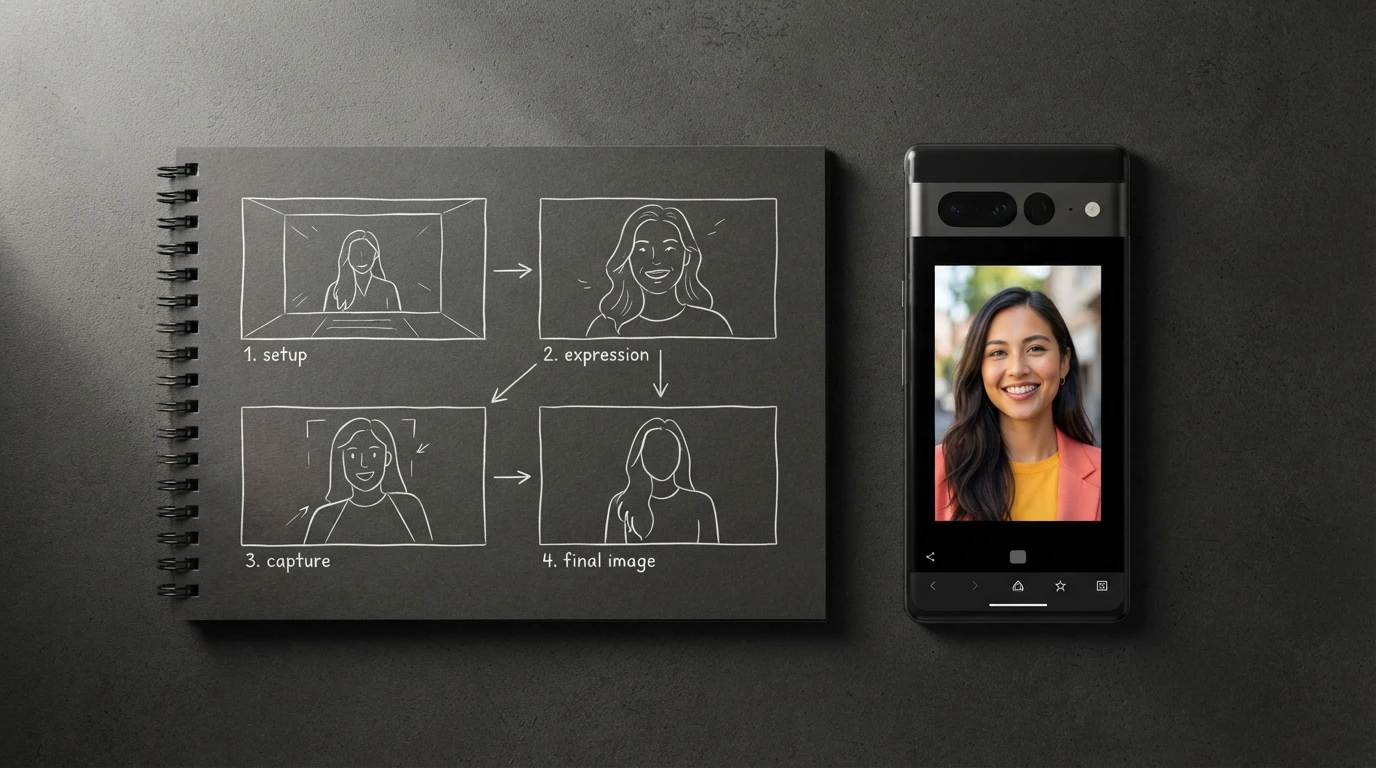
Then inspect one finished script beside its final edit. The opening should create immediate curiosity through a visual change, an unexpected claim, a direct problem, or another pattern interrupt. Every spoken beat should have a corresponding visual plan rather than a vague direction such as "show relevant footage."
Use this scorecard during vendor calls:
| Capability | Strong evidence | Warning sign |
|---|---|---|
| Scripting | Spoken phrasing, timed beats, clear payoff | Essay-like paragraphs |
| Pattern interrupts | Hook changes the image, sound, or expectation immediately | Logo animation before the idea |
| B-roll planning | Specific subject, framing, motion, and placement | "Add stock footage" |
| Filming | Vertical-safe composition and repeatable shot setup | Horizontal footage cropped later |
| Nonlinear video editing software | Organized project files, proxies, relinking, and export presets | Flattened exports with no editable timeline |
| Caption design | Intentional line breaks, emphasis, and safe placement | Automatic captions left unreviewed |
| SFX | Sounds reinforce cuts and actions | Effects added continuously for noise |
| Revisions | Defined rounds, response times, and approval owners | Unlimited revisions with no process |
| Turnaround | Calendar covers script, shoot, edit, review, and delivery | A delivery date with no review window |
| Platform expertise | Native examples for TikTok, Reels, and Shorts | One generic cut distributed everywhere |
Check framing standards before filming. TikTok's official creative guidance recommends full-screen vertical creative and sound-led execution, so a crew accustomed to horizontal corporate interviews may create footage that becomes cramped after cropping to a 9:16 frame.
Generic corporate production often prioritizes controlled lighting, long approval chains, and one polished master video. Short-form publishing needs a different operating rhythm: frequent concepts, modular filming, rapid editing, native captions, and enough variation to replace weak ideas without derailing the calendar.
Which Video Production Company Model Fits Short-Form Workflows?
Script creator software, freelancers, agencies, and internal teams solve different parts of the production chain. Choose the model according to your content volume, filming complexity, approval structure, and need for repeatable brand control.
| Production model | Best suited to | Main strength | Main limitation |
|---|---|---|---|
| Traditional production company | Campaign films, interviews, location shoots | Production management and filming depth | May be too slow or expensive for frequent vertical posts |
| Short-form agency | Brands outsourcing strategy through delivery | Platform-native execution under one owner | Retainers can include capacity you do not use |
| Freelancer | Defined editing, filming, or scripting tasks | Flexible specialist support | Continuity depends heavily on one person |
| In-house team | Brands publishing continually across channels | Fast access to people, products, and approvals | Hiring creates fixed cost and management overhead |
| AI video agency | High-volume concepts and AI-assisted visual production | Faster ideation and synthetic asset creation | Human review remains essential for claims and brand accuracy |
| Hybrid workflow | Teams with filming or editing resources already in place | Keeps expertise internal while accelerating bottlenecks | Requires a clear handoff system |
An AI video script generator can remove the blank-page delay, but its output still needs production logic. ViralScript AI structures short-form scripts around a documented 3-second pattern interrupt, then adds beat-level B-roll, camera, caption, SFX, transition, CTA, and looping instructions for 15-, 30-, and 60-second formats.
That makes the tool useful inside a hybrid model. A creator can approve teleprompter-ready voiceover before filming, while an editor receives visual and audio cues instead of reverse-engineering the script after footage arrives. Generative visual tools such as Kling AI text-to-video may supply individual shots, but they do not replace the planning, approvals, rights management, and editorial judgment expected from a production partner.
A TikTok script generator should also preserve the creator's speaking style. Generic writing tools, including broad assistants marketed like a QuillBot AI script generator, often optimize sentences without accounting for breaths, cut points, caption density, or the visual payoff that keeps a vertical video moving.
Who Should Use an Agency, Freelancer, or In-House Team?
A short-form agency suits marketing teams that want one accountable partner for concepts, scripts, filming, editing, and delivery. It works best when internal staff can approve briefs quickly but cannot manage several specialists. Skip this model when you only need a defined editing task or publish too irregularly to use reserved capacity.
A freelancer is the better fit for a narrow bottleneck. Hire a short-form editor when your team already supplies approved scripts and organized footage; hire a writer when editors keep receiving voiceovers that run long or lack visual direction. Ask what happens during illness, scheduling conflicts, and simultaneous deadlines because single-person capacity is the central trade-off.
An in-house team makes sense when content depends on constant access to a founder, product, studio, or subject-matter expert. The advantage is speed of communication. The burden is building the workflow: script status, shoot readiness, footage naming, edit ownership, feedback, exports, and channel scheduling all need visible owners.
Hybrid production is often the most practical choice for creator-led brands. Internal staff keep brand knowledge and on-camera access, software accelerates structured scripting, and outside specialists handle filming or editing peaks. Teams evaluating that setup can compare ViralScript AI pricing and workflow tiers against the recurring cost of manual script preparation and scattered document handoffs.
What Limitations and Contract Terms Should You Check?
A production contract should state exactly what will be delivered, who owns each asset, and what triggers extra charges. Phrases such as "social video package" are too loose. Specify final aspect ratios, captioned and clean versions, project files, raw footage, thumbnails, audio stems, platform variants, and delivery format.
Pay close attention to usage rights. Music, Pexels free stock videos, fonts, templates, voice models, and generated visual media can carry different licensing conditions. Free access does not automatically mean unrestricted paid advertising, sublicensing, resale, or perpetual commercial use.
Ownership language also needs precision. The US Copyright Office guidance on works made for hire explains that commissioned work qualifies only under defined legal conditions, so do not assume payment alone transfers every copyright. Ask counsel to review consequential agreements and require the contract to identify ownership of scripts, raw footage, edits, and reusable project assets.
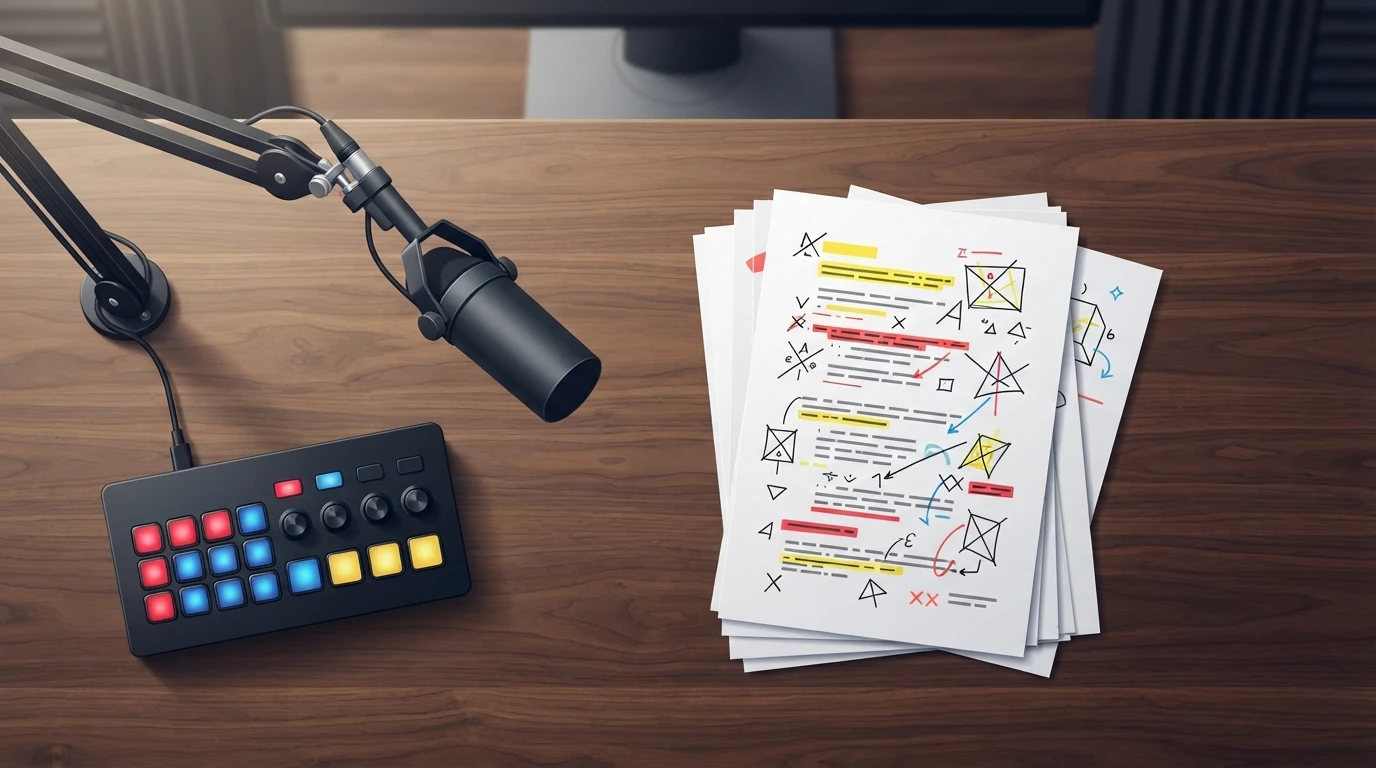
Revision terms should define what counts as a revision and what counts as a new concept. Changing caption placement differs from replacing the hook, reshooting the presenter, or rewriting the offer after approval. Set the review window, feedback owner, included revision scope, and rate for work outside that scope.
Turnaround language should separate production time from client delay. It should also address cancellations, rescheduling, talent availability, location costs, backup storage, confidentiality, and what happens when licensed media must be replaced. When evaluating software alongside service vendors, review published commercial terms such as the ViralScript AI refund policy before committing a team workflow.
How Should You Test a Video Production Company Before Committing?
Run a paid pilot that resembles your real publishing process. A heavily simplified test hides the operational problems you need to find, especially weak hooks, unclear B-roll direction, slow approvals, and files scattered across messages and private drives.
Use this sequence:
- Provide the same creative brief format you plan to use after onboarding, including the audience, promise, proof, CTA, brand restrictions, and reference videos.
- Approve the teleprompter-ready voiceover and shot plan before filming, then record how many clarification messages the vendor needs.
- Review the first edit for opening retention logic, speaking pace, caption placement, SFX discipline, visual continuity, and platform-safe framing.
- Request a realistic revision, inspect the final file structure, and compare actual handoff time with the promised schedule.
Test batch production rather than one isolated hero video if recurring output is the goal. The partner should show how it groups locations, wardrobe, props, talking-head takes, B-roll, and editor handoffs without making every post look identical.
Also test the loop. A looping ending should reconnect the final phrase or visual to the opening without an obvious stop, giving the video a natural replay point. Forced loops repeat the first frame without completing the idea; good loops make the viewer realize the ending has already returned to the premise.
Teams that want to test structured scripts before assigning filming and editing can start building short-form scripts with ViralScript AI, then use the exported voiceover, captions, and production cues as a consistent vendor brief.
Frequently Asked Questions
What is a hook in a short-form video?
A hook is the opening spoken, visual, or audio beat that gives the viewer a reason to continue. Effective hooks create a specific information gap, identify an urgent problem, demonstrate an unexpected result, or interrupt a familiar scrolling pattern.
What makes a good hook for TikTok, Reels, or YouTube Shorts?
A good hook is easy to understand without prior context and has a visual action that supports the spoken line. Remove greetings, logos, and setup language that delay the core promise.
Is there a free TikTok script generator available?
Free generators exist, but compare the output structure rather than the price alone. Check whether the script includes spoken pacing, B-roll, captions, transitions, SFX, CTA placement, and a looping ending instead of delivering plain paragraphs.
What should a teleprompter-ready voiceover script include?
It should use natural spoken phrasing, short readable segments, deliberate pauses, pronunciation notes where needed, and clean separation from production directions. The presenter should never have to read camera instructions aloud or search through a storyboard to find the next line.
Should every short-form video use the same aspect ratio?
Vertical 9:16 is the safest primary format for full-screen TikTok, Reels, and Shorts publishing, but framing must still protect captions, interface overlays, and crops. Request platform-specific exports when placements or paid media specifications differ.
The right video production company will make your content system easier to operate, not merely deliver attractive footage. Compare a real script, a real edit, and a real contract before committing. If you need help mapping ViralScript AI into an agency, freelance, or in-house workflow, reach out to our team with your current production setup.